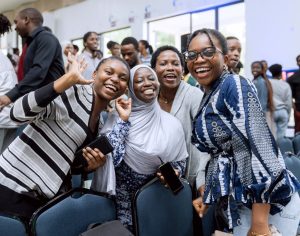
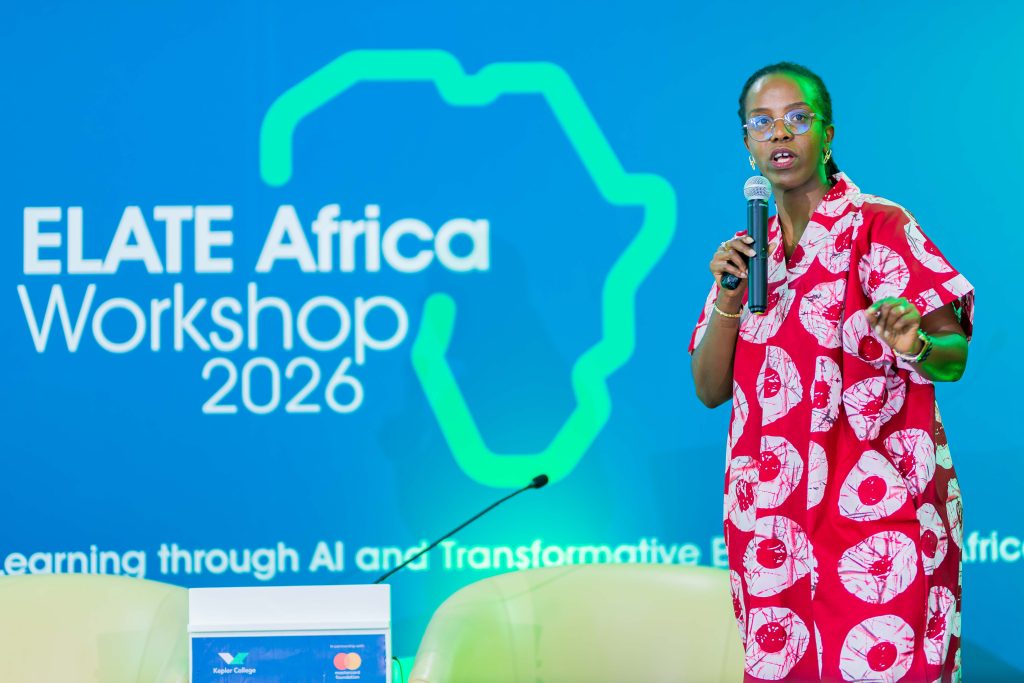
Across Africa, universities face a defining question: how do they prepare millions of young people for a world of work being rapidly reshaped by artificial intelligence? That question took centre stage in Kigali from May 7-8, as Kepler College hosted the 2026 ELATE Africa Conference under the theme “Educating for the Future of Work: AI-Enabled Pedagogies for Africa’s Next Generation.”
The conference brought together university leaders, policymakers, researchers, employers, and technology experts from across Africa to explore how higher education institutions can leverage artificial intelligence to improve teaching, learning, assessment, and student success while ensuring ethical, equitable, and contextually relevant implementation.
Preparing Graduates for a Changing Workforce
Africa is home to the world’s youngest population, with millions of young people entering the labour market every year. At the same time, technological advances are transforming jobs at an unprecedented pace, presenting both a profound challenge and a significant opportunity for African universities.
The numbers presented at the workshop make the stakes clear. Between 10 million and 12 million young Africans enter the labour market each year, yet only around 3 million formal jobs are created annually. This gap makes it increasingly urgent for higher education to rethink how it prepares graduates for a technology-driven economy.
Throughout the conference, participants discussed how universities can redesign curricula, assessment methods, and student support systems to better align learning outcomes with the demands of the future workforce. A growing consensus emerged: students will not succeed by competing against artificial intelligence. They will succeed by learning how to work alongside it.
Vivens Uwizeyimana, founder of Umurava, a platform connecting African developers with real-world work opportunities, echoed this call for stronger foundations before AI adoption.
“Most graduates are still at a basic level. They may know how to use tools like Gemini or ChatGPT, but many lack the deeper prompting and application skills employers need,” he observed.
From Experimentation to Institution-Wide Strategy
While many institutions have begun exploring AI tools, conference participants emphasised the importance of moving beyond isolated experiments toward sustainable, institution-wide strategies. For many, the question is no longer whether to adopt artificial intelligence, but how to do so responsibly and effectively.
As Jean Paul Mbabazi, Director of Registration, Digital Learning and Innovation at Kepler College, put it: “One of the biggest lessons is that institutions must first establish policies that define where and how AI should be used — and where it should not.”
This emphasis on governance and institutional readiness featured prominently throughout the conference, particularly as universities navigate concerns related to academic integrity, privacy, transparency, and equitable access to technology.
Amos Mfitundinda, Head of Department for Strategic Capacity Development at the Ministry of Public Service and Labour (MIFOTRA), reinforced the urgency of this shift.
“It is no longer a future concept; it is part of our daily reality,” he said, “The task now is ensuring our people become masters of this technology rather than being controlled by it.”
Building African Solutions for African Contexts
As AI adoption accelerates globally, African institutions have a unique opportunity, and responsibility, to develop solutions that reflect local realities, languages, cultures, and educational needs. A recurring theme throughout the conference was that Africa must actively shape its own AI future rather than simply importing solutions developed elsewhere.
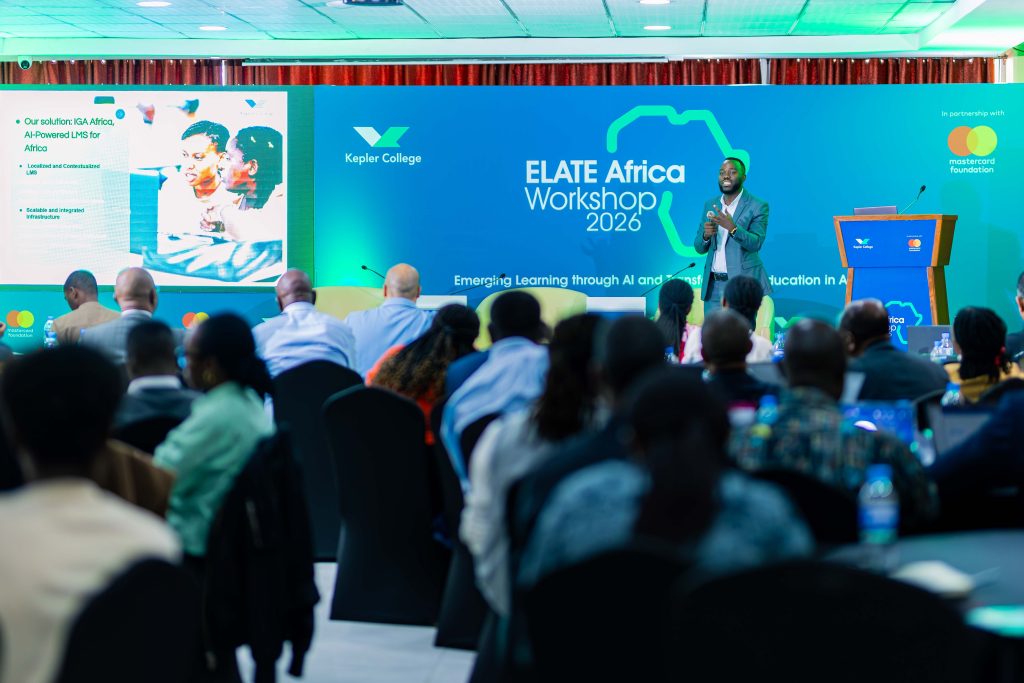
Mbabazi pointed to IGA, an AI-powered learning management system developed at Kepler College with African education realities in mind. Designed to address the specific constraints of the local context, from infrastructure limitations to cost pressures, IGA represents the kind of locally-built innovation the conference called for.
“It helps us solve real problems within our context while reducing costs and building local innovation capacity,” he said.
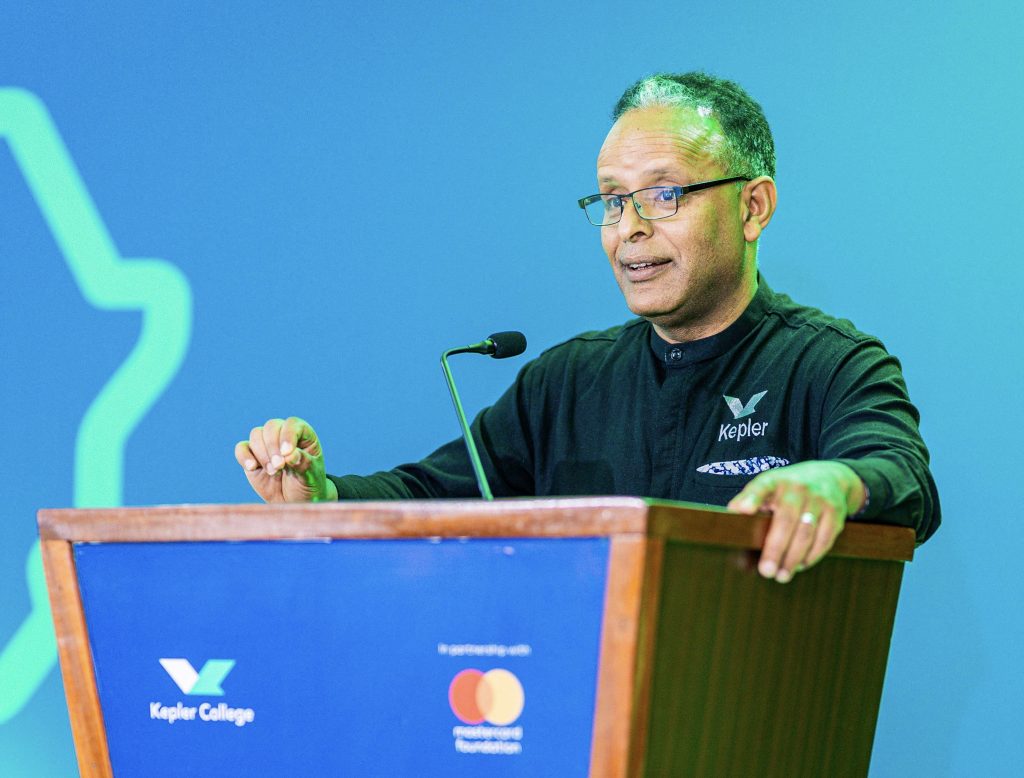
Kepler College Vice-Chancellor Prof. Baylie Damtie Yeshita challenged African institutions to go further: becoming active contributors to the global AI ecosystem, not just consumers of it.
“If we simply export our data, it will return to us as expensive intelligent tools built elsewhere,” he warned.
His remarks underscored a broader imperative: Africa must invest in research, talent, infrastructure, and innovation ecosystems that enable it to lead in AI, not merely adapt to it.
Translating Conversations into Institutional Action
Beyond ideas and discussion, participants highlighted the importance of translating AI conversations into concrete institutional action.
Reflecting on changes implemented at the University of Embu in Kenya following the inaugural ELATE Africa conference, Dr. David Muchangi Mugo, a senior lecturer in artificial intelligence at the University of Embu in Kenya, noted the shift in approach: “We realised we needed institutional policies, not just guidelines.”
He also acknowledged the practical barriers institutions must address along the way including infrastructure costs, skills gaps among staff and students, resistance to change, and ethical concerns around privacy and creativity.
The impact of ELATE Africa is already being felt across the continent, with universities implementing new policies, practices, and technologies to better prepare students for an AI-driven future. Kepler College has long worked to bridge the gap between education and employment by combining academic rigour with practical, workplace-relevant experience. As technologies continue to reshape industries, that mission has never been more relevant.
The 2026 ELATE Africa Workshop concluded with a landmark outcome: the launch of the ELATE Africa Community of Practice (CoP). Anchored in implementation priorities rather than aspiration alone, the CoP is designed to foster ongoing collaboration, shared learning, and collective action beyond the workshop itself ensuring that the momentum of ELATE Africa 2026 translates into lasting change for the next generation of African graduates.